Showing posts with label Utah Prison Move. Show all posts

Tuesday, March 7, 2017

Keep it in Draper would have saved taxpayers $100 Million or more

In 2015, I made some "startling claims".

First, I stated that there was enough room at the current Draper Prison location to rebuild the prison, even if the state wanted a brand new 4,000 bed prison.

http://fredcox4utah.blogspot.com/2015/06/how-to-keep-prison-in-draper-utah.html

Second, I stated it would save the tax payers $100 Million or more to "Keep it in Draper".

http://fredcox4utah.blogspot.com/2015/08/utah-prison-moving-it-or-not-to-salt.html

and from this:
http://www.sltrib.com/home/2856875-155/legislature-oks-prison-move-to-salt

"Rep. Fred Cox, R-West Valley City, pushed the Legislature to reject the unanimous recommendation of the Prison Relocation Commission to build in Salt Lake City. He also didn't want it moved to the other potential locations in Grantsville, Eagle Mountain and Fairfield. Instead, Cox argued it is not only feasible to rebuild the prison where it is in Draper, but it would save as much as $100 million. "I still believe the Draper site is the best location," he said."

Now that the dust has settled from the 2015 legislative votes, what has happened?


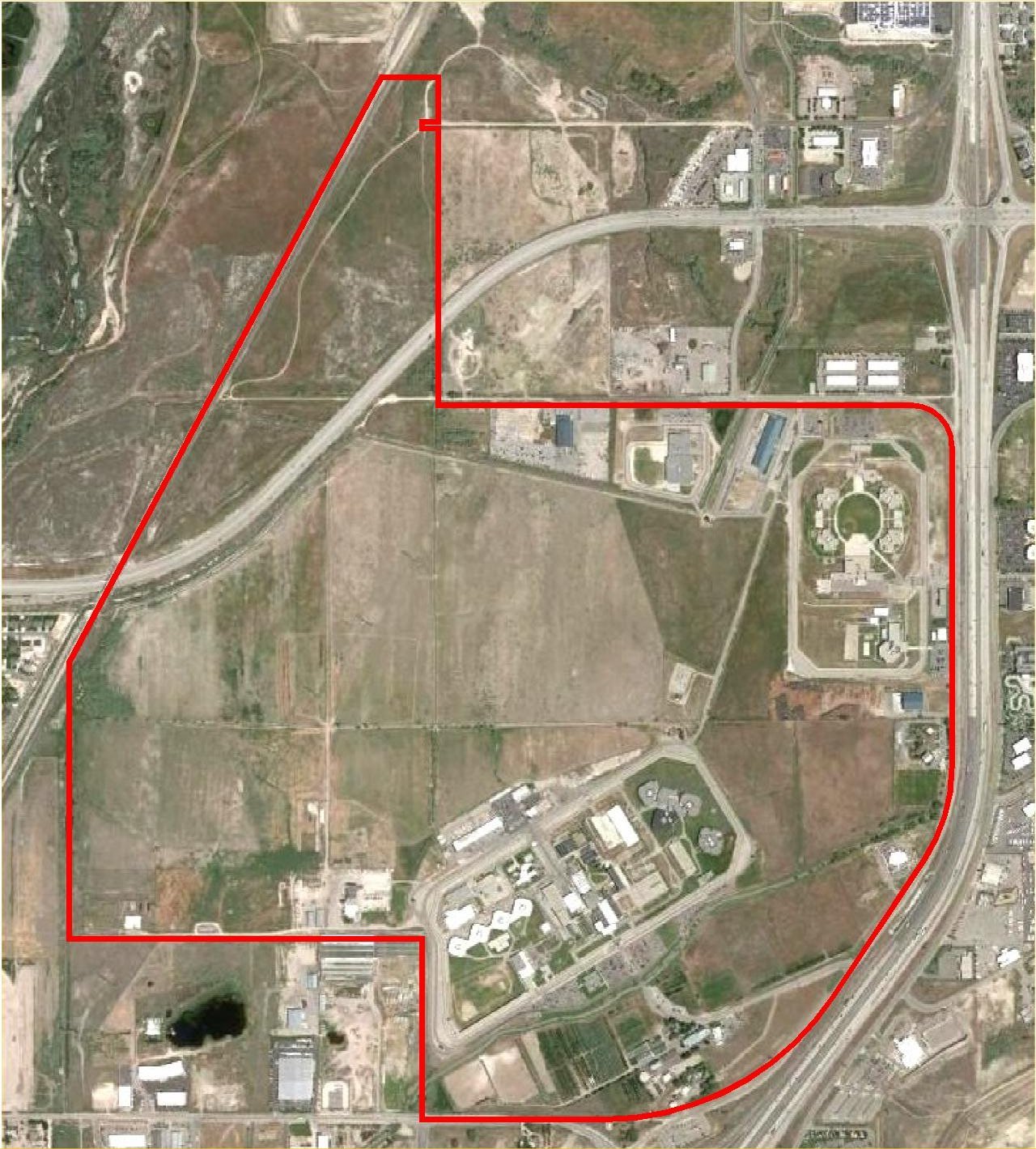
For the land area, I was told they needed 500 acres. I said there was enough land in Draper that was vacant and even if they did need 500 acres, it could be phased and would still fit as there were around 680 acres the state owned at the Draper Prison site.

The "experts" claimed they couldn't build at the Draper Prison for security reasons, even though they didn't have any issues with expanding the Gunnison Prison while it is occupied. "That is outside the security fence", I was told. I reminded them I worked on the site plan drawings for the original Gunnison Prison and I was aware of that.  I also told them they could build at Draper out side the security fence and even proposed a construction access point that would not create a security problem.

Again, I am not an expert on prisons. I served as a volunteer at the Draper Prison for 2 years. many years ago I worked on the construction drawings for the Gunnison Prison, including the site and floor plans and also the site and other drawings for Oxbow in South Salt Lake, plus site master plans for several proposed prison locations around the county, while working for a local firm. I have spent 30 years designing sites for commercial shopping centers and other commercial sites. 

I was told I didn't know what I was talking about. I have been proven right on all accounts.

Later, when the "real" consultants were hired, instead of the "experts" from New Jersey and Texas, the state decided they only needed 323 acres west of the Salt Lake Airport and it would have plenty of room to expand.

http://www.deseretnews.com/article/865662856/Potential-expansion-already-a-question-as-new-prison-moves-forward.html

http://fox13now.com/2016/11/04/utah-spends-12-4-million-for-323-acres-to-build-new-state-prison/


Now that they are adding up the cost of the west of the Salt Lake City Airport location, they now need $100 Million more from taxpayers.

http://www.sltrib.com/news/5022806-155/lawmakers-quickly-draft-pass-bill-for

So the $80 Million in cash plus $470 Million in Bonds for the Prison has now increased to $570 Million in bonds plus the $80 Million in cash.

Wow! Who could have seen this coming?

Thursday, August 13, 2015

Utah Prison moving it or not to Salt Lake City

My response to recent emails:

PRADA and the PRC were not tasked with studying rebuilding the prison at Draper. While I was not in the appropriation meetings referred to a few years ago in a response to your email, I have been at all public PRC meeting this year, and attended the public meetings at the 3 communities, and I have reviewed studies that are public and requested and recently obtained other studies that have not been posted such as the Geotechnical and Utilities Reports.

While there was one report from the outside consultants recently re: building at Draper, I personally spoke to the consultant and he was not able to defend,  in my opinion, his claim that the prison would be more costly or could not be rebuilt safely at the Draper site. That is his opinion. His big concern was doing construction work inside the fence and not outside the fence. The State is expanding Gunnison Prison right now, but constructing it outside the security fence.

There is enough room to rebuild the current main men's facilities (South Point) and the new core area for a prison at Draper in the vacant land, "outside the fence". Construction traffic can come from the north, not impacting the current security gate systems. South Point can then be torn down and the rest of the prison can be rebuilt on site. The power lines could be moved onsite for $10 Million if we need to, based on estimates sent to me from RMP.

Phasing could run from $5 Million per year (local contractor number) to $17 Million per year, (PRC number). Depending on how it is phased, at least one year of extension of time would be required. Based on the proposal to use surcharging at the SLC site, it would not take more time to rebuild at Draper, in my opinion. Even not surcharging the SLC site, the time to build roads and utilities could be less at Draper as they are already on site. We don't have to spend the $150 Million just to get and use the site if we use Draper.

At Draper, we could phase it over a much longer time period, reportedly saving $Hundreds of Millions, but if we are going to build a brand new prison somewhere now, it is my opinion it can be at Draper, and I believe at a savings around $100 Million, and be closer to current employees and not be further from current volunteers.

There is some savings for other travel/transportation costs of the SLC site over Draper, but those two locations, Draper and SLC, are the least costly long term to have a prison at than the other 3 locations, according to the reports provided the PRC.

For the SLC site, the consultants geotechnical firm's "not for construction, preliminary" but lengthy report suggests 1 to 2 years of surcharging the site to remove excess water and to compress the site and then to remove part of that earthwork to allow the site to rebound. If the state does follow that suggestion, along with the piers recommended, their estimate is $60 Million and 18 months for that work.

Re: the Ground at SLC site, Do I believe the prison could be built at the SLC site with less costly methods than those suggested? I do. Do I think the geotechnical solutions will be more costly than budgeted, I don't. I am not a Geotechnical Engineer, but as an architect I have been reviewing geotechnical reports regularly for over 20 years and I am working on resolving any concerns I have with the site with a different geotechnical engineer that has the most experience, in my opinion, of any in the state and especially in that specific area.  It is likely the same engineer that other agencies of the state are asking questions about the site.

The water and sewer costs at the SLC site vary greatly depending of if the those utilities are obtained from Magna or SLC. Water is cheaper one place and sewer is cheaper the other. This item could effect the cost to construct a prison at SLC by [ ...] millions, either way.

Again, I am not an expert on prisons. I served as a volunteer at the Draper Prison for 2 years. many years ago I worked on the construction drawings for the Gunnison Prison, including the site and floor plans and also the site and other drawings for Oxbow in South Salt Lake, plus site master plans for several proposed prison locations around the county, while working for a local firm. I have spent 30 years designing sites for commercial shopping centers and other commercial sites. Utah has 680 acres at Draper and we could design that location to free up land for Draper to get additional prime commercial property, creating a win-win.

Do I believe it makes sense policy wise to move the prison from Draper? I do not.

If you are going to spend, what I believe to be $100 Million of more money to move the prison, the SLC site location makes the most sense long term for the state based on transportation and other ongoing costs. I don't believe the site there will stay vacant for very long. The Agricultural zoning will likely be changed to manufacturing and high tech firms will move there, near the airport. Will they also move to Draper, over time, likely.

Good questions.

Fred C. Cox,
Rep. House 30

Monday, July 13, 2015

Moving the Prison for money does not pencil out

Basically, the $95 Million in taxes that are expected to be generated each year from a fully developed Commercial Draper site will Not be used to pay back the cost of moving the prison as it is likely the development would be commercial office and not retail, so the taxes would be Property Taxes benefiting the city and the local school district and Income Taxes, that benefit education.

the $1.8 Billion economic effect per year is similar to GDP per year where Utah is doing almost $150 Billion currently (so a small percentage wise) and Utah can now grow more than that in a year now not over the 10 years or 20 years it would take to hit that level after someone invests a $1 Billion of private money at Draper. Several have argued that 700 Acres couldn't generate 1/10th of our GDP. The good news it can't and won't, (closer to 1%) but it isn't claimed that it will. 


Replace the infirmary at Draper. And the Wasatch cell blocks. The U shaped annex to the South East and the Reception and Orientation building to the north east. Put the new buildings north east of the main complex. Maintain what you have at Draper and you save hundreds of millions. Talk to the staff that work at Draper. We are already building a new Pod of cells at Gunnison. The new reform passed this year will help. Don't move the Draper Prison.

Even if you do decide to replace the Draper Prison all at once now, not moving it will save the property land cost, moving costs, and the utility and infrastructure costs. Moving will not benefit the inmates, the staff, the volunteers, the visitors or the taxpayers.

Who is left? The City of Draper, the local school district, the owners of the proposed properties, and the developers. 


Well, based on the list of who benefits, Keeping it in Draper should be the decision.

Update: Both numbers could be higher or lower depending on what is done with the property if it is sold to the private sector.

One piece not covered is if retail sales are much of the tax revenue the state received, from the 680 acre site, that would come back as sales tax which would help the general fund which is where the money to rebuild a prison would come from.

If however much of the tax revenue came from income taxes or property taxes, (typical of a high end office complex) that would not repay the general fund.


The other point not mentioned is the Value Added (GDP) for Utah is currently between $140 Billion and $150 Billion. The $1.8 Billion proposed, eventually in 2029 is a number we can and have hit in one year statewide, not 10 years.

Certainly Draper City can benefit from increased property taxes if the prison moves.

I look forward to the additional numbers on Thursday, and the additional geotechnical reports coming in the next few weeks.

Friday, June 19, 2015

How to Keep the Prison in Draper Utah

The existing main men's prison area can be rebuilt north of it, and then torn down and then the rest of the complexes replaced on site and then the existing town down.

The prison can obviously be re-built new on site in just 2 phases. It will not cost more, and will likely save money. 93 percent of the voters in my area said even in January to keep the prison in Draper. They knew it would cost money. How much we keep of what is good will save more, but I believe even if we rebuilt the entire complex at Draper, the cost building new at the other sites will be more, counting wetlands, water, sewer, transportation, etc.

Back to the sketch.

The yellow line is approx. where the power lines are. The dashed line could be a proposed power line re-location. To move the lines would likely cost millions of dollars. How many millions would determine if it is worth it or not. The difference between $2 M or $20 M is a big deal.  I don't have those numbers yet. I just have confirmed it is possible. The power company has relocated lines dealing with Mountain View highway. They can do it. It isn't free.

The buildings can be built so they are not too close to or under these lines.

I have designed several buildings near and under power lines before, for example the ECI building west of I-15 at 700 S and 700 West in Woods Cross. It has transmission lines from 2 different power lines on both sides of the building. Depending on the amount of power in the lines, the distances between the lines and the buildings are different.

The other lines on the sketch shows different areas.

The NE corner near I-15 is approx. 120 acres. If we decide to replace all of the buildings as opposed just the worst ones, that 120 acres seems to be the most valuable for commercial office or retail to be eventually sold off to the private sector and developed and used to help replace part of Draper's property tax loss.  It has visibility and access off of an existing intersection at Bangerter. It can be accessed from 2 different I-15 interchanges.

The part north of Bangerter is approx. 68 acres. It could be used for a hub for transit, wetland credit,  or manufacturing, commercial or residential. It is likely not going to be used for expansion and could be sold off at any time.

Out of the approx. 680 acres there, that would leave almost 500 acres. Enough for the new prison.

The main men's prison area where Wasatch is about 50 to 60 acres.  That total section of ground in the middle of the site is about 350 acres and likely could include all the current prison rebuilt.

There is about 90 acres just south of Bangerter. It could be kept for Utah now to speed up phasing, or kept for future expansion or sold later for office or manufacturing.

The remaining 40 acres on the west, south of that would likely be kept for expansion, or used to help phasing now.

There is actually a few more acres there, but it is clear the existing main men's prison area can be rebuilt north of it, and then torn down and then the rest of the complexes replaced on site and then the existing town down, with approx. 180 acres sold and 500 acres kept now, with an option of selling 90 acres later.

However, selling land now will make it harder to re-build the prison on site 50 years from now. We need to be careful not to sell too much land.

Fred C. Cox
House District 30

Moving the Prison and the PRC vs Keep it in Draper

A recent response to someone writing me:

Thanks for writing. I understand some of the frustration, but some of it could be misplaced.

For example, I wrote/asked 3 questions at the PRC meeting at Salt Lake City, but only one was asked. A moderator tried to interpret the questions and sometimes did better than other times. Because there was not an opportunity at any of the 3 public meetings or 1 public hearing to ask questions directly or have follow up question or statements to clarify, many felt like their question was never really asked, let alone answered. Many of the answers were very good, even some I didn't agree with.

The good news is the Utah Legislature can read the questions here, as most of them were not able to be able to attend all 4 meetings. I am glad I was there.

http://le.utah.gov/asp/interim/prc.asp

At the Grantsville PRC meeting, I only asked one question. The question was given to one of the outside consultants who had no clue what the answer was, even though it was covered on page 172 in the final report and so he avoided the question. I don't think he did it to be mean.

Someone else asked the same question at Eagle Mountain. Rep. Wilson took the question head on and did a great job of answering it. Basically, the $95 Million in taxes that are expected to be generated each year from a fully developed Commercial Draper site will not be used to pay back the cost of moving the prison as it is likely the development would be commercial office and not retail, so the taxes would be Property Taxes benefiting the city and the local school district and Income Taxes, that benefit education.

Someone else did a good job in answering and pointing out the $1.8 Billion economic effect per year was similar to GDP per year where Utah is doing almost $150 Billion currently (so a small percentage wise) and Utah can now grow more than that in a year now not over the 10 years or 20 years it would take to hit that level after someone invests a $1 Billion of private money at Draper. The person asking the question had argued that 700 Acres couldn't generate 1/10th of our GDP. The good news it can't and won't, (closer to 1%) but it isn't claimed that it will.  (I understand both of those numbers are being looked at by staff).

I was impressed with some of the public questions at PRC meetings. You could tell that many had done their homework and knew the reports, etc. in many cases better than the hired consultants. Some questions were not as helpful as they seemed to target a person not an issue. Some included personal attacks. Most were civil however.

I also understand your frustration, as today I texted KSL radio two questions for the Governor and neither were read, but were combined and changed and then given to the Governor with my name.

I asked:

"From Rep. Fred Cox For the SLC location wetlands will dramatically increase the cost of that location. The other locations have water, sewer and transportation issues. Will you veto any bill to move the prison if those initial reports hold. There are hundreds of acres in Draper to begin rebuilding the prison there."

"From Rep. Fred Cox. Governor Herbert, it appears based on comments from the PRC meetings that transportation, water and sewer costs make the current Draper Prison Site the best to replace the prison. If that remains the case will you veto any bill to move the Draper Prison"

What was asked the Governor was simply if he was going to veto any move to relocate the prison. Not what I asked at all, so how do I fault the Governor for his non certain, too early to tell, answer.?

I do hope the PRC posts the audio/video/statements from the public hearing on Tuesday. I also hope the public Q&A is posted. Perhaps they are.

The first statements from the Public hearing on Tuesday that included the Salt Lake City representatives and other locations were very specific, prepared, and in my opinion, destroyed any reason to move the prison.

The PRC members are pretty smart and will have in the future clarifications and other reasons and answers to back up the non-binding decision to move the prison from the resolution last year.

Remember no one is perfect. We all have strengths and weaknesses. While the public meetings and hearing were not perfect, I know our staff spent many long hours to make them as best as they could.

Again, thank you for your passion.  I believe Rep. Wilson held his temper really well and did a good job of answering the moderated questions he got.  Even though I don't agree with him on a few issues, he has my respect, as do the other PRC members.

The couple of architects that I know that have experience in this area are more interested in designing the buildings if they win the future RFP and didn't want to be involved in this phase. I am sure that limits the choices for consultants.

Fred C. Cox
House District 30
West Valley City

Thursday, April 9, 2015

Petition For Extraordinary Writ


PETITION FOR EXTRAORDINARY WRIT PURSUANT TO UTAH RULE OF APPELLATE PROCEDURE 19, AND UTAH CODE 20A-7-307 (3) (a).

Notice is given that Fred C. Cox, a Utah Voter, Petitioner, petitions the Utah Supreme Court to direct Spencer J. Cox, Lt. Governor, State of Utah, Respondent, to accept the Application for an Initiative or Referendum by Stephanie Gricius and four other Sponsors, attached, for the purpose of allowing them to attempt to obtain signatures for a referendum, to submit to the voters of the 2015 Utah General Election a repeal of 2015 2nd Sub. HB 454, now Enrolled, “Prison Development Amendments”, as allowed by the Utah Constitution, Article VI, Sec. 1, (2) (i) (B), and Utah Code, Title 20A, Section 7, Part 3.  The bill failed to obtain a two-thirds vote of both Houses.

The Sponsors attempted to submit their Application on March 27, 2015, but was refused and denied that opportunity by the Utah Lt. Governor’s Election Office, based on the deadline found in Utah Code, 20A-7-302 (1) “within five calendar days after the end of the legislative session at which the law passed.”, which this year ended March 12, 2015. By the deadline specified in Utah Code, March 17, 2015, it was not known if the Governor would sign this bill, and according to the Legislative Website, the Governor was sent the Enrolled version of the bill on that day.

The Governor signed the bill on March 25, 2015 and finished signing or vetoing any other session bills on April 1, 2015, a deadline per Utah Constitution Art. VII, Sec. 8. The effective date of the bill to become law is May 12, 2015, as the immediate effective date found in the bill did not apply without the 2/3 vote of both houses.

This Court is the court specified by Utah Code 20A-7-307 (3) (a) for an extraordinary writ to compel the Lt. Governor to accept the application for any referendum petition. Even though the Petitioner, a Utah Voter, as required by Code 20A-7-307 (3) (a), is also a current member of the Utah House of Representatives, the Petitioner is powerless to repeal or request legislation soon enough to be of help to the Application Sponsors, in this case, without a special session being called by the Governor, who signed the bill, or this Court. The Court recently ruled in a similar case involving Draper City where an extraordinary writ was issued per Utah Code  20A-7-6 (4).

The Petitioner, contends that the deadline found in Utah Code, 20A-7-302 (1) does not provide a legal voter the power vested by the Utah Constitution, Art. VI, Sec. 1, (2) (i), as in most cases the voter will not know if the bill will be signed by the Governor by that deadline. The Petitioner requests the Court to decide this matter, and asks that the deadlines be adjusted by the Court for this case, so the Sponsors can submit their Application, and also have time to obtain signatures.

Fred C. Cox, a Utah Voter, Petitioner

Note, a copy of the Petition For Extraordinary Writ was delivered to the Lt. Governor's Election office for Fred C. Cox by James Dabakis on April 3, 2015. 

[UPDATE]

The  court asked for more information on May 1, 2015.
This has my response and a motion.


SUPPLEMENTAL PLEADINGS IN RESPONSE TO COURT ORDER
DATED MAY 1, 2015
AND MOTION TO ORDER A DELAY TO THE EFFECTIVE DATE OF 2015 HB 454
PENDING THE DECISION OF THE COURT.

Fred C. Cox, a Utah Voter, Petitioner, responds to the Court Order for supplemental pleadings to the following two questions by the Court:.
1. What form of the "copy of the law" must be attached to an application for a referendum petition under Utah Code 5 20A-7-302(2)(d); and, if the term "law" is construed to mean "a bill passed by the Legislature," how does an applicant comply with that requirement if a copy of the enrolled version of the bill is not available within the five-day limit specified by Section 20A-7-302(1)?

2. What standing, if any, do voters have to challenge the denial of referenda petitions or applications for referenda petitions?

SUPPLEMENTAL PLEADINGS
Response to Court Question 1a: The Enrolled version of the bill. Under Utah Article VI Section 25 and Utah Code 36-12-12 the Legislature has the Office of Legislative Research and General Counsel prepare the “final” version of the bill after it has passed both Houses. This enrolled version of the bill is what is presented to the Governor to sign. The Governor has the option to sign the bill, veto the bill, allow the bill to become law without his signature, or provide a line item veto of the bill. This year he did all of those.

Utah Code 36-12-12 tasks the Office of Legislative Research and General Counsel to prepare the enrolled version for hundreds of bills each year leaving enough time for the Governor to receive the enrolled bill and make his decision in 10 days or at least prior to the 20 day deadline after the session found in Utah Article VII Sec. 8.  An Enrolled bill is not a law without this process. See again Utah Article VII Sec. 8. According to Legislative Research, some bills are in enrolled form within 5 days after the session but most are within 12 days. They are then sent to the House or Senate, to printing and then to the Governor.

Response to Court Question 1b. While an applicant can attempt to apply for a referendum using a different version than the enrolled version of the bill, only the enrolled version of the bill, that has become a law, prior to its effective date, meets all the requirements of 20A-7-302 and 303 and Article VI, Section 1, (2)(a)(i)(B). One of the tasks the Lt. Governor’s office is given is to evaluate the application, making sure the applicant has the proper forms, disclosures and the correct version of the law. See 20A-7-303 and 304.

Response to Court Question 2a. A Utah voter has Standing under US Constitution Amendment 1, Utah Article VI, Section 1, (1)(b) and more specifically in this case Utah Article VI, Section (2)(a)(i)(B). This Utah Constitutional Section protects the voters’ legislative power to create and veto laws, except as delegated to the House and Senate. Also providing Standing for a Utah Voter regarding the denial of referenda petitions is Utah Code 20A-7-307 (3) (a).
If the lieutenant governor refuses to accept and file any referendum petition, any voter may apply to the supreme court for an extraordinary writ to compel the lieutenant governor to do so within 10 days after the refusal.

Response to Court Question 2b. Providing Standing for a Utah Voter regarding the denial of applications for referenda petitions is again US Constitution Amendment 1, Utah Article VI, Section 1, (1)(b) and more specifically in this case Utah Article VI, Section (2)(a)(i)(B).

“require any law passed by the Legislature, except those laws passed by a two-thirds vote of the members elected to each house of the Legislature, to be submitted to the voters of the State, as provided by statute, before the law may take effect.”

Also providing Standing for a Utah Voter regarding the denial of applications for referenda petitions is Utah Code 20A-7-307 (3) (a).  In this case, the application was not allowed by statute after 5 days from the session and therefore it was the policy for the Lt. Governor’s Election Office to instruct interested parties of that deadline, including the applicants and the Petitioner. The Petitioner is a Utah Voter, and also in this last session attempted to amend the bill, which failed, and voted against it twice. There is an additional reason however any Utah Voter has standing regarding the denial of applications for referenda petitions. The applications are part of the process for referenda petitions and a Utah Voter has Standing per Utah Code 20A-7-307 (3) (a).  There is not a question that the Lt. Governor’s office was attempting to follow Utah Code. The question for the Court is if the Code follows the State Constitution. 

MOTION
Fred C. Cox, a Utah Voter, Petitioner, requests the Court Order before May 12, 2015, a delay to the effective date  of 2015 HB 454 pending the decision of the Court, and depending on that decision, include the days that would have been allowed under statute for those applying for a referendum to gather signatures, and have those signatures verified.

If the Motion is granted, the Court Order to delay the effective date, is requested that the notice be sent to both the Respondent and to the Utah Office of Legislative Research and General Counsel arriving no later than May 11, 2015. This delay of the effective date will be required by Utah Article VI, Section (2)(a)(i)(B).

“require any law passed by the Legislature, except those laws passed by a two-thirds vote of the members elected to each house of the Legislature, to be submitted to the voters of the State, as provided by statute, before the law may take effect.”

along with Utah Article VI Section 25 and Utah Code 36-12-12 . If the Court decides grant the Petition for Extraordinary Writ to allow the application for referendum for 2015 HB 454 to be submitted, the law must not take effect during the process of the referendum. Based also on the Order the Court has given the Respondent, they will have 15 days to respond to this Supplemental Pleadings and Motion. That response deadline is not before May 12, 2015.

Fred C. Cox, a Utah Voter, Petitioner    May 5, 2015,
Delivered May 6, 2015


[UPDATE 2]

The Lt. Gov/AG submitted a response to the motion part of the previous filing on May 11, 2015.
The Motion back to the Court on that day was as follows. 

MOTION TO STAY AND REQUEST FOR EMERGENCY RELIEF FOR AN ORDER TO DELAY THE EFFECTIVE DATE OF 2015 HB 454 PENDING THE DECISION OF THE COURT.

Fred C. Cox, a Utah Voter, Petitioner, responds to the Respondent with the following Motion:.
MOTION TO STAY AND REQUEST FOR EMERGENCY RELIEF
1.    The Court is already aware that the Petitioner and the Respondent differ on the Standing of the Petitioner in this case. That was one of the two main questions the Court asked. The Petitioner stands by the argument previously presented that as a voter, in this case, continues to argue he has standing.
2.    The Court also asked if the current law was flawed based on the State Constitution. The Petitioner answered the questions. The Respondent, who has not responded directly yet to the first question, still has time to respond, but that will not be soon enough to protect the Petitioner’s rights under Article VI.
3.    The Court and the Responder have copies of the Application for a Referendum that was attempted to be filed on March 27, 2015. Those sponsors were repeatedly told that they could not submit the application as was the Petitioner on that date, since the 5 days had passed since the session. Since March 27, 2015. there has been no reason stated by the Respondent as to why the Application was not able to be submitted, other that the statute timeline in question, which the Petitioner believes violates the Utah Constitution and has asked for protection of that right as a Utah Voter.
4.    The Court has wide power under the Rules of a Petition of Extraordinary Writ to protect the rights of a Utah Voter.
5.    The Rights of the Petitioner, a Utah Voter, according to Article VI include the right veto the law in question because it didn’t received the 2/3rds vote of both houses prior to the Effective Date, which is tomorrow. (Providing there are enough other Utah Voters). There is nothing in the Utah Constitution that says the Law Must have the Effective Date in 60 days, only that it can not be sooner unless the bill received the 2/3rds vote of both houses, and that it is the default of 60 days. The Petitioner belies the Court has the power to delay that date, providing the Respondent more time to answer the Court’s first question in more detail.
6.    The Petitioner therefore asks for a MOTION TO STAY AND REQUEST FOR EMERGENCY RELIEF

Fred C. Cox, Dated May 11, 2015

[Update 3]
FRED C. COX, Petitioner,
v
SPENCER J. COX, in his capacity as Lieutenant Governor of the State of Utah, Respondent.
Case No. 20150261-SC
ORDER
This matter is before the Court on a petition for extraordinary relief. The petition pertains to a contemplated referendum for the repeal of HB 454, entitled "Prison Development Amendments," enacted by the Utah Legislature during the 2015 General Session, which ended on March 12,2015. The petition asserts that a group of sponsors prepared a referendum application and that they "attempted to submit their Application on March 27, 2015, but [were] refused and denied that opportunity by the Utah [Lieutenant] Governor's Election Office, based on the [five-day] deadline found in Utah Code, 20A-7-302." The Petitioner has not identified himself as one of the prospective sponsors, and the Court has determined he lacks standing to contest any action or inaction by the Lieutenant Governor with respect to the prospective sponsors' application. Accordingly, the petition is dismissed.

7-17-15
FOR THE COURT
Matthew B. Durrant
Chief Justice

[Update 4]
4 proposed applicant sponsors then filed a similar petition with the court. The court did not rule in their favor. A copy is found at 

http://law.justia.com/cases/utah/supreme-court/2015/20150581.html

It did include this:
"A statutory amendment to clarify the manner in which referenda sponsors may satisfy the statutory requirement to attach a copy of the “law” might be appropriate, but we leave that to the judgment
of the Legislature."


Thursday, December 18, 2014

Draper Prison to move or not to move

Representatives and Senators, [PRC members]

re: the Draper Prison, Uinta Five Reception and Orientation building along with the Oquirrh Five Annex and almost all of Wasatch.

Based on information provided to me by constituents in my area that work at the Draper Prison, I believe at minimum, the listed Draper buildings need to be replaced. They could be replaced on site, as there seems to be enough room to double or triple the number of beds at Draper, or possibly targeted to be replaced off site, at a new prison location, such as near the Wal-Mart Distribution Center near Stansbury Mountain, in Tooele County. Based on the report, there is enough room for Gunnison to match Draper in beds as it is currently. An alternate or 3rd site is not required.

I was wondering if we have a specific cost for constructing each of these 3 complexes and if the Draper Prison can function in place without any or all of these 3 buildings. Clearly, the buildings can be built on site and then these specific existing buildings can be demolished.

It is the opinion of many that the majority of the buildings at the Draper Prison, other than these, can function for many years, if not decades.

Any new cell complex should at least have the safety of layout of the 192 bed pods at Gunnison. From an aerial photo, it appears a large percentage of the beds at Draper are in the pod or super pod type layout with the central control station.

I have stood in Wasatch, in one of the active cell block common areas with my wife. I don't like that layout. We spent two years as volunteers at the Draper Prison. It was interesting to use the non-denominational chapel that I had worked on the drawings for many years ago.

While it has been many years since I worked on construction drawings for jails and prisons, I helped with the construction drawings for a Salt Lake County Jail expansion/remodel down town (later demolished), Oxbow, Gunnison, and using the 192 bed pod system, perhaps a dozen potential 1920 bed complexes around the country. At one point, I perhaps had drawn more parking spaces and jail/prison cells than anyone I knew in the State.

Based on the information I have now, I [still] would not have voted to move the prison when [others] voted on [it] last year. I realize Draper City is tired of having the prison and the property around it is getting worth more and so the State may want to move it sometime in the next few decades.

What I said in February 2014: 
http://fredcox4utah.blogspot.com/2014/02/do-not-move-prison.html

Since the timeline for moving has not be agreed to by the legislature, finding out from the Prison or your consultant the cost of replacing only the 3 complexes mentioned would be helpful for direction and discussion. 

For many years, anyone moving near the Draper Prison has known it was there. It would be wise if the prison is to be moved, for residents to have many years to know it is moving and where it is moving to, long before it does.

Fred C. Cox,
Rep. Elect, House 30
West Valley City, UT 84120

PS, based on me being at the West Jordan school where they had as many as 2,500 people show up opposed to the prison moving near there, and other similar reports, I don't believe any of the current 6 sites will work.

They may be close for employees, visitors, volunteers, schools, courts, and medical, but the Draper location has those already. Those items are more important than the cost of the land in Draper, as the people involved are worth more than the buildings and the land. Again, the majority of the buildings at Draper are fine, with no rush to replace. We do need to target replacing particularly the Wasatch block cells for prison officer and inmate safety, in my opinion.

Saturday, February 15, 2014

Do Not Move the Prison

Moving the prison will help Draper, at the expense of the rest of Salt Lake County and Utah. Lets move it to where we forget it? No, that really is a bad idea. Keep it to where it is close to colleges, hospitals, the courts, and lots of visitors and volunteers. We don't actually want the prisoners to stay prisoners.

There is enough room to add 576 beds and you wouldn't notice which would allow the few non-pod type facilities to be replaced. We also have this really cool system in Gunnison where the prisoners work with wild horses. For those prisoners that the Draper facility doesn't work, we have that option.

With the Mountain View (Corridor), the Draper Prison isn't the bottle neck it was. There are many acres of developable land in that general area that could actually be worth less if more land is added. Will it increase population in that area for schools, likely. Will the money end up going where the schools will be needed, not likely.

Where: In Salt Lake County? Why move it. Outside of Salt Lake County, further from resources and courts.

Don't move the prison.

Disclaimers:

I am an architect. Moving the prison would likely help my profession. I have drawn thousands of jail and prison cells many years ago, including working on the Gunnison Prison, Oxbow Jail, and others out of state.

I also invested 2 years as a volunteer for a church service mission at the Draper Prison. 

Update, what passed the Legislature was a decision to move the prison, sometime, somewhere weighing many of the concerns I have listed.